

Distal biceps rupture
What is a distal biceps rupture?
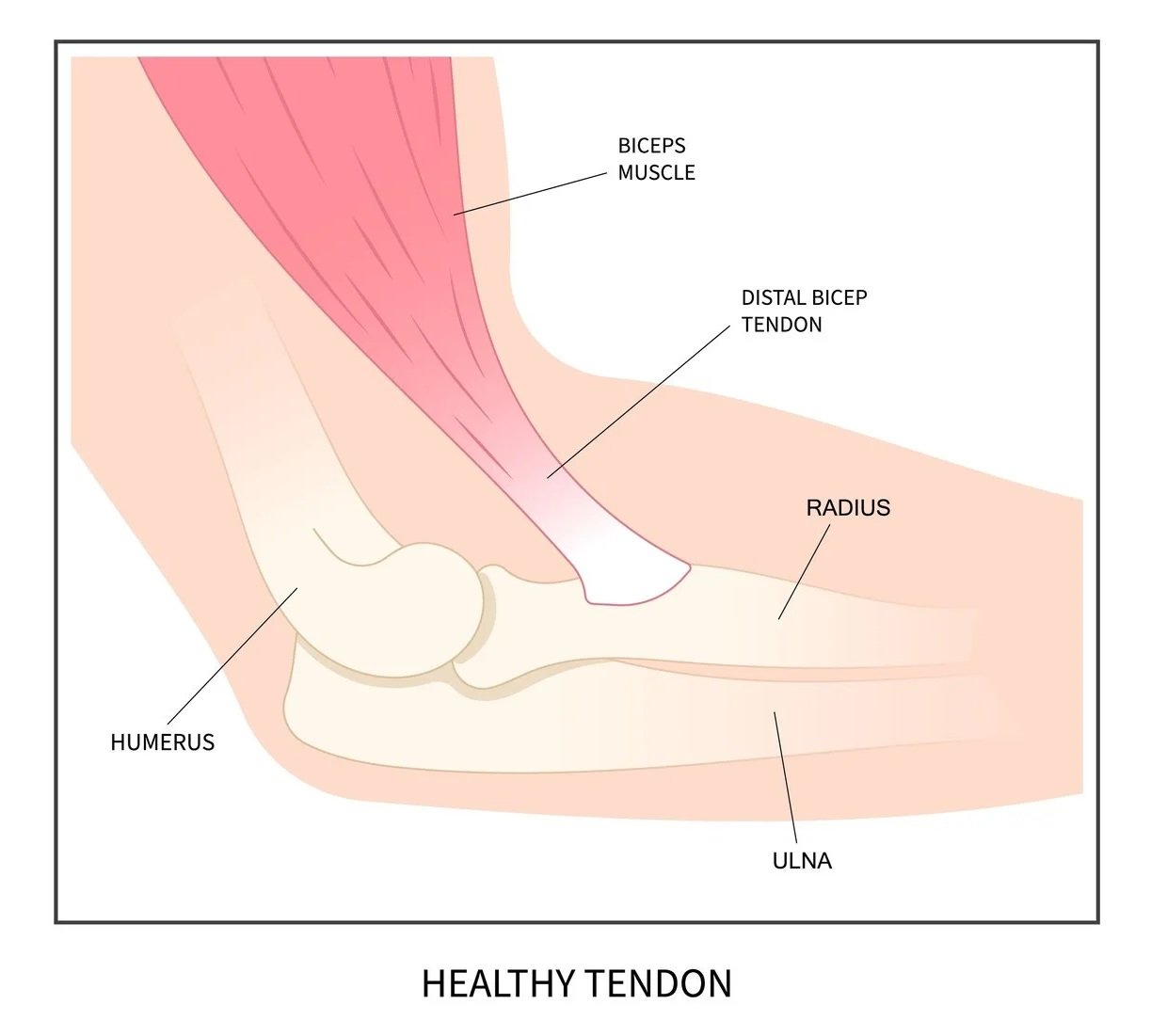
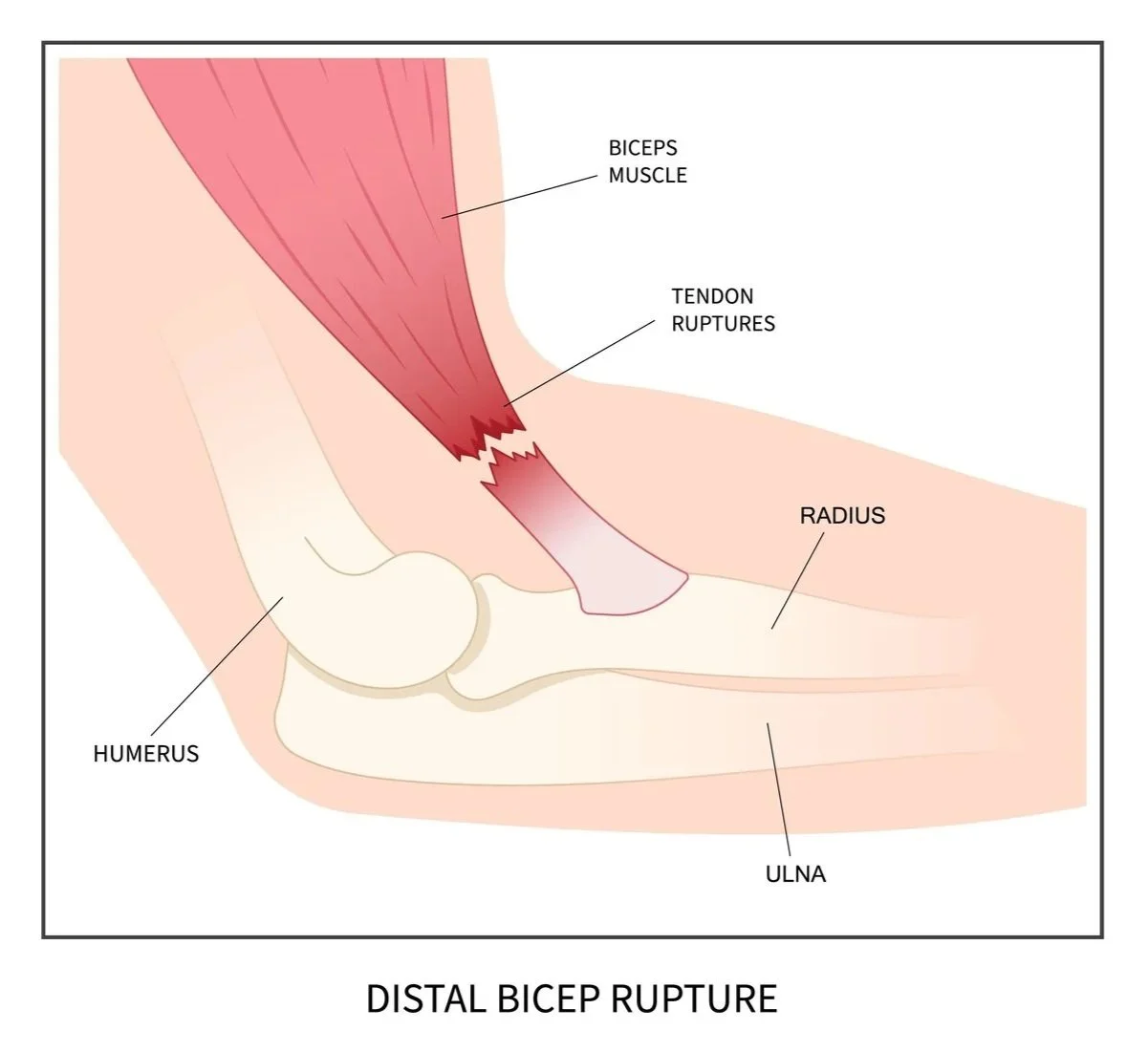
A distal biceps rupture (tear) occurs when the tendon that attaches the biceps muscle to the elbow tears away from the bone.
This injury usually happens suddenly and is most often a complete tear, meaning the tendon fully detaches. Once torn, it does not heal back to the bone on its own.
The biceps muscle is important for:
Bending the elbow
Turning the palm upward (for example, using a screwdriver or lifting objects)
Without treatment, you may still be able to use your arm, but strength—especially for twisting movements—can be significantly reduced.
How do I know if I have a distal biceps rupture?
Common symptoms include:
A sudden “pop” in the front of the elbow
Immediate pain (which may settle over time)
Swelling and bruising around the elbow
Weakness when bending the arm or turning the palm upward
A visible bulge in the upper arm (“Popeye” appearance)
A gap or change in contour at the front of the elbow
Many patients notice difficulty with activities that involve lifting or rotating the forearm.
How Ben can help?
Diagnosing distal biceps ruptures
Ben will first chat to you about how your injury happened and what symptoms you are feeling. He will then use two methods to diagnose your tendon rupture:
Physical Examination: Ben will examine your arm, ascertain where there is tenderness, and check for any less-obvious physical deformities that may have been missed by your GP and/or emergency physician. He will also compare strength and movement with the opposite side.
Imaging tests: Ben will, in some cases, order an X-ray to rule out other injuries that could be causing the issue. He may also order an Ultrasound or MRI to clearly show the tendon and assess the extent of the tear.
Treating distal bicep ruptures
Non-surgical treatment
Non-surgical treatment is generally offered for patients with lower physical demands, if the injury has occurred in your non-dominant arm and/or if the patient is willing to accept some loss of strength.
Treatment will usually include a combination of rest, activity modification and anti-inflammatory medication. Ben will also generally refer you to a physiotherapist.
It is important to note that while non-surgical treatment can relieve pain and allow you to have reasonable function in your arm, it is unlikely that you will regain full strength in the injured arm. You should expect that twisting movements of the forearm will remain limited indefinitely.
Surgical treatment
Ben will recommend surgery to patients who wish to restore strength and function, particularly if they have an active lifestyle or job that involves lifting. The procedure involves Ben making small incision/s near the elbow so that he can reattach the torn tendon back onto the bone at the elbow. He may need to use metal implants (known as suture anchors) to reconnect the tendon and bone For the best results, surgery is ideally performed within 2–3 weeks of the injury.
A plaster splint is applied during surgery and usually is removed two weeks post-operatively. At this point, you will be referred to a physiotherapist to begin a structured rehabilitation program to help you regain range of motion and strength. The bicep tendon takes more than 3 to 4 months to fully heal, so it’s important to protect the repair during this time and limit movement to what is prescribed by Ben and your physiotherapist. Ben will discuss with you your specific recovery timeline as part of your consult/s with him.
-
Ben operates at multiple hospitals across Melbourne’s bayside and peninsula region, including:
Linacre Private Hospital, Hampton
Peninsula Private Hospital, Langwarrin
Beleura Private Hospital, Mornington
He can discuss your preferences in person during your consultation.
-
Ben will see you for a post-operative appointment usually 2 weeks after your surgery. During this appointment he will asses your wound and check that healing and mobility is progressing as expected. There will be no cost for this appointment.
As well as this, Ben will usually refer you to a physiotherapist, who focuses on rehabilitation after an injury, and will work with you to improve function of the affected area.
-
You can usually start driving again 4-6 weeks after the operation. However, every surgery is different, so Ben will provide individualised advice as part of the initial consultation.