

Broken collarbone (clavicle fracture)
What is clavicle fracture?
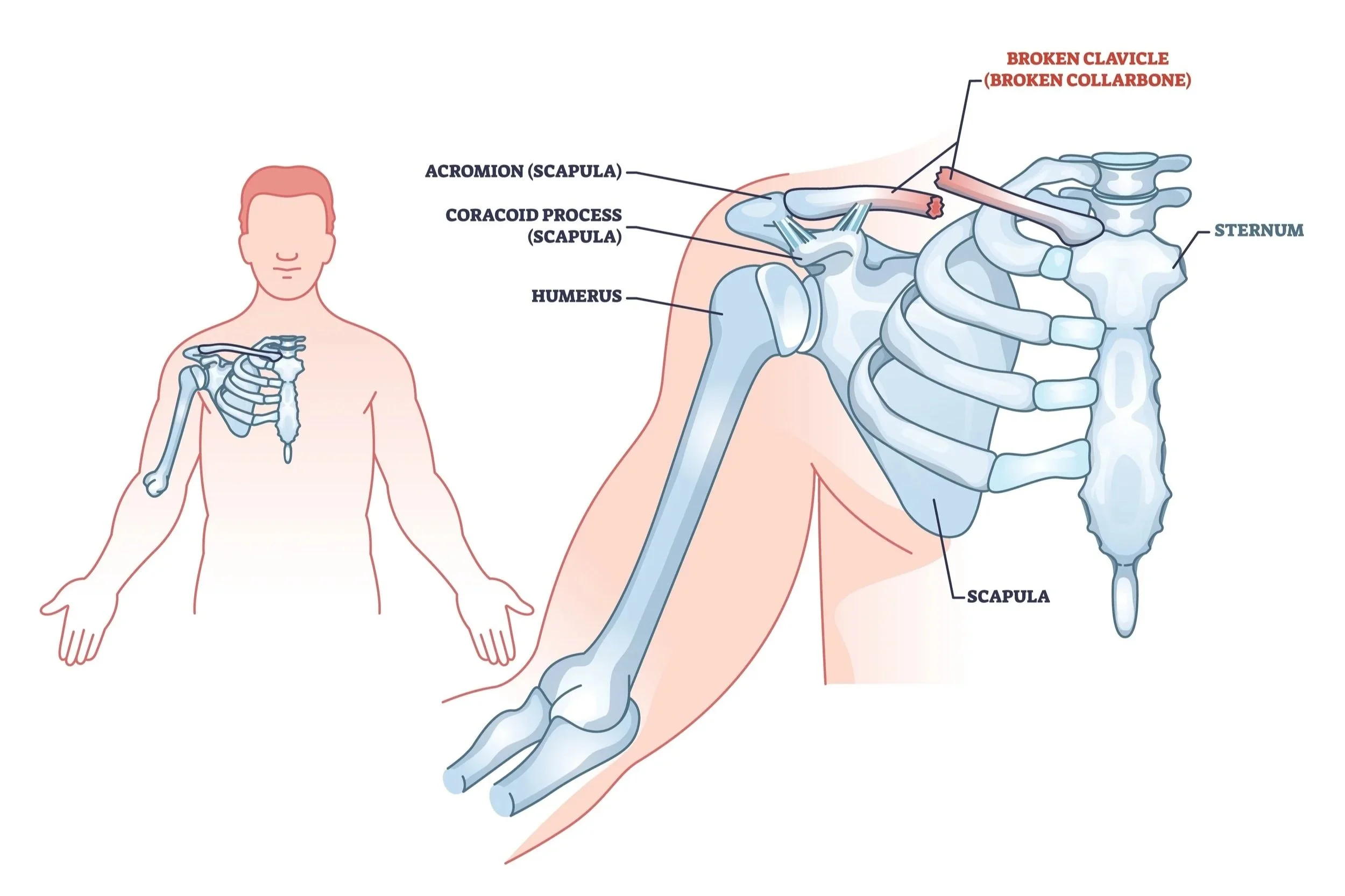
A clavicle fracture, also known as a broken collarbone, is a break in the bone that connects the breastbone (sternum) to the shoulder blade. The clavicle helps support shoulder movement and acts as a strut between the chest and shoulder.
Clavicle fractures are very common and can occur in people of all ages. They most often happen after a fall onto the shoulder, a direct blow, or sporting injury. The middle portion of the clavicle is the most common area to break.
The severity of the fracture can vary from a simple crack in the bone to a displaced fracture where the broken ends have moved apart.
How do I know if I have a clavicle fracture?
A broken clavicle usually causes sudden pain after an injury. Most patients notice immediate discomfort and difficulty moving the arm.
Common symptoms include:
Pain over the collarbone or shoulder
Swelling and bruising
A visible bump or deformity along the collarbone
Tenderness when touching the area
Difficulty lifting or moving the arm
A grinding or clicking sensation with movement
The shoulder appearing to droop forward or downward
In some fractures, the broken ends of bone may be prominent beneath the skin.
How Ben can help?
Diagnosing a clavicle fracture
Ben will discuss how the injury occurred and examine the shoulder and collarbone for swelling, deformity, tenderness, and skin changes. The arm, nerves, and blood supply are also assessed to ensure there is no associated injury.
X-rays are usually performed to confirm the fracture and determine the position of the broken bone fragments. Additional imaging, such as a CT scan, may occasionally be required for more complex fractures involving the joints at either end of the clavicle. The imaging helps determine whether the fracture is suitable for non-surgical treatment or whether surgery may provide a better outcome.
Treating a clavicle fracture
Non-surgical treatment
Many clavicle fractures can heal successfully without surgery, particularly when the broken bone remains well aligned.
Non-surgical treatment usually involves wearing a sling to support the arm and allow the fracture to heal. Ice, pain medication, and gentle movement exercises may also help reduce discomfort and stiffness during recovery.
As healing progresses, physiotherapy may be recommended to gradually restore shoulder movement and strength. Most fractures heal over several weeks, although some patients may notice a small bump at the fracture site after healing.
Non-surgical treatment may be recommended for fractures that are minimally displaced or in patients where surgery is not appropriate.
Surgical treatment
Ben will usually recommend surgery when the fracture fragments are significantly displaced, shortened, unstable, involve the joint surfaces, or if the bone has broken through the skin. Surgery may also be considered for active patients wishing to restore shoulder function and alignment more reliably.
There are a number of surgical options:
Plate and Screw Fixation: This is the most common surgical treatment for a clavicle fracture. During the procedure, the broken bone fragments are repositioned into their normal alignment and secured using a specially designed metal plate and screws placed along the clavicle.
This technique provides stability while the bone heals and aims to restore the normal shape and length of the collarbone. The plate and screws usually remain in place permanently, although they can occasionally be removed if they become prominent or uncomfortable.
Surgery for Complex or Open Fractures: More severe fractures involving multiple fragments, significant displacement, or open wounds may require more complex surgical reconstruction. Ben will carefully restore the alignment of the bone and stabilise the fracture to encourage healing and reduce the risk of complications.
Following surgery, the arm is usually supported in a sling for a period of time before physiotherapy begins. Rehabilitation focuses on gradually restoring movement, strength, and shoulder function over the following months.
-
Ben operates at multiple hospitals across Melbourne’s bayside and peninsula region, including:
Linacre Private Hospital, Hampton
Peninsula Private Hospital, Langwarrin
Beleura Private Hospital, Mornington
He can discuss your preferences in person during your consultation.
-
Ben will see you for a post-operative appointment usually 2 weeks after your surgery. During this appointment he will asses your wound and check that healing and mobility is progressing as expected. There will be no cost for this appointment.
As well as this, Ben will usually refer you to a physiotherapist, who focuses on rehabilitation after an injury, and will work with you to improve function of the affected area.
-
You can usually start driving again 4-6 weeks after the operation. However, every surgery is different, so Ben will provide individualised advice as part of the initial consultation.